

January 19, 2026
Common Forms of Trucking Accidents
Commercial trucks roll down the highway every day, delivering vital goods to cities and towns from coast to coast. While they keep the economy moving, these massive vehicles operate under tremendous forces and can cause severe bodily harm when accidents occur. Learn about common types of truck accidents, legal and liability considerations, and other helpful tips if you’ve been injured in a crash.
Contributing Factors in Commercial Truck Accidents
Commercial truckers, passenger vehicle drivers, adverse weather conditions, and other factors may contribute to a semi-truck accident. Here are some of the most likely causes:
- Driver fatigue: Long stretches behind the wheel can drain a driver’s alertness, slow reaction times, and increase the risk of dozing off.
- Distracted driving: Distractions such as texting, adjusting the radio, or eating take a driver’s attention off the road, increasing the chance of overlooking hazards and making costly mistakes.
- Improper or inadequate truck maintenance: Worn brakes, under-inflated tires, or other mechanical problems affect a truck’s ability to stop or maneuver safely.
- Poorly secured or uneven cargo: When cargo shifts or isn’t properly tied down, it can destabilize the truck or spill onto the road, especially during turns or sudden stops.
- Hazardous road conditions: Wet pavement, high winds, or damaged roadways make controlling a large vehicle more difficult and unpredictable.
- Insufficient braking distance: A fully loaded truck takes far longer to stop than a car. Following too closely or misjudging stopping time increases the risk of a semi-truck accident.
Types of Commercial Truck Accidents
Commercial truck accidents come in many forms:
- Rear-end collisions: When a truck fails to stop in time and hits the vehicle ahead of it, the crash impact tends to be more intense given the truck’s size and weight.
- Head-on collisions: These occur when a truck drifts into oncoming traffic or crosses the center line due to distraction, fatigue, or loss of control.
- T-bone (side-impact) accidents: Most common at intersections, a truck may strike the side of a car when it runs a red light, fails to yield, or makes an improper turn.
- Jackknife accidents: When a truck driver brakes too abruptly in slippery conditions, the trailer can swing out sharply, folding toward the cab. This sudden motion can cause the truck to block multiple lanes or crash into nearby vehicles.
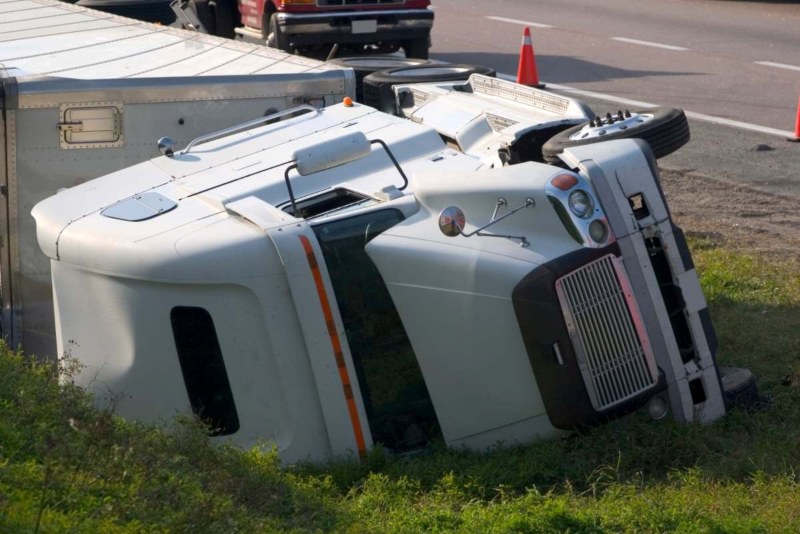
- Truck rollovers: A loaded trailer with a high center of gravity can tip over during sharp turns, swerves, or in windy weather. Rollovers are especially dangerous when the trailer lands in another lane.
- Blind-spot collisions: Commercial trucks have significant blind spots, especially on the right side and behind the truck. If a driver changes lanes or turns without checking their mirrors carefully, vehicles in those blind spots may be clipped, sideswiped, or even crushed.
- Wide-turn accidents: Tractor-trailers require much more space to turn than cars. If there’s not enough room, the truck may catch nearby cars or pedestrians in its path.
- Underride accidents: Some of the deadliest truck wrecks occur when a smaller vehicle slides under a big rig’s trailer, often when the truck stops suddenly or in poor visibility.
- Cargo-related crashes: A destabilized truck may lose control, while spilled freight can trigger a pileup.
Legal & Liability Considerations
Determining liability in a truck accident case often requires careful investigation. Because trucks involve so many moving parts—including the driver, the trucking company, maintenance crew members, and cargo loaders—more than one party may be to blame.
A lawyer for truck accident claims identifies negligence by examining driver logs, maintenance records, cargo loading documents, eyewitness statements, and camera footage. Proper legal representation helps victims pursue compensation for medical bills, lost wages, pain and suffering, and more.
Prevention & Safety Tips
Avoiding a truck accident isn’t always possible. However, whether you drive a truck or share the road with one, you can decrease the likelihood of getting in a wreck with these tips:
- Maintain a safe following distance: Follow at least three to four seconds behind the vehicle ahead of you. Increase this distance near commercial trucks and in bad weather.
- Keep yourself visible: Avoid lingering in a truck’s blind spot. If you can’t see the driver in the side mirror, the driver can’t see you.
- Be cautious around turning trucks: Give big rigs plenty of room when they signal a turn.
- Adjust for weather and road conditions: Slow down in wet, icy, or foggy conditions.
- Secure cargo properly if you’re the driver: Make sure freight is loaded evenly, tied down firmly, and does not shift during transit.
- Take care of your vehicle: Properly maintain your brakes, tires, and suspension system.
Why Choose Carvalho & Associates Attorneys at Law?
Carvalho & Associates has been serving personal injury victims for over 30 years. We are a well-respected law firm based in Las Vegas, recognized for winning numerous high-dollar and high-profile cases over the years. Our attorneys are available 24/7 and draw on abundant resources to represent you thoroughly. If you or a loved one has been involved in an accident, schedule a free consultation with our commercial truck accident attorney today.
FAQs
How soon after a truck accident should I contact a lawyer?
Reach out as soon as possible—ideally within days. Beginning the legal process early helps preserve evidence for the investigation.
What kind of compensation can a truck accident case provide?
Compensation may include economic losses related to medical bills, lost wages, future medical care, and property damage, as well as non-economic losses such as pain and suffering.
Can I hire a lawyer if the truck driver and company deny fault?
Yes. A skilled truck accident attorney can investigate the crash, gather evidence, and challenge fault claims to build a strong case.
Does it matter what type of truck accident occurred?
Possibly. The type of accident affects how investigators assess fault, liability, and the full extent of the damages.
Is there a time limit to file a truck accident claim in Las Vegas?
Yes. Nevada law generally gives you two years to file a personal injury claim and three years for property damage. Missing these deadlines may bar you from pursuing compensation, so don’t wait.